BLOG
Supportive Therapies For Better Outcomes — Enrich Your Life Through Relaxation Techniques, Aromatherapy, and Gentle Movement.
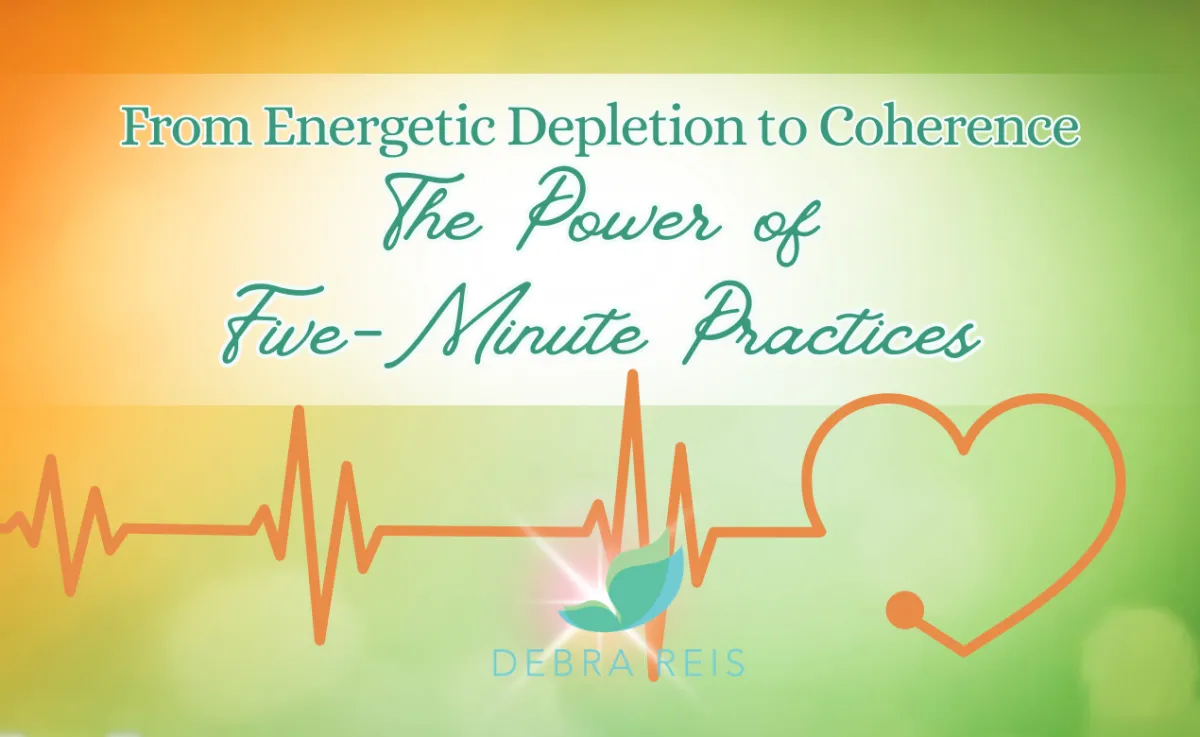
From Energetic Depletion to Coherence: The Power of 5-Minute Practices
Have you ever noticed that your body knows you're overwhelmed before your mind is willing to admit it?
Your shoulders tighten. Your breathing changes.Your jaw clenches.
Your thoughts begin racing. You become irritable, distracted, or unusually quiet.
Sometimes you simply know: "Something feels off."
Our bodies are communicating with us all the time. Yet in our busy lives, especially for those of us in healthcare and other caring professions, we become very good at ignoring those messages.
We keep going. We push through. We take care of everyone else.
Until eventually, the whisper becomes a shout.
What if, instead of waiting until we reach exhaustion, we learned to listen sooner?
That question is at the heart of my work around energetic depletion, inner alignment, and coherence.
Depletion Is More Than Being Tired
When we think about depletion, we often think about physical exhaustion, but energetic depletion can affect many dimensions of our lives.
Physical: What is my body telling me?
Mental: What thoughts are occupying my attention?
Emotional: What feelings need acknowledgment?
Energetic: Where does my energy feel flowing, or stuck?
Spiritual: What reconnects me with meaning, purpose, hope, and something greater than myself?
Sometimes depletion looks like fatigue, but it can also look like cynicism, numbness, irritability, isolation, constant busyness, or losing our sense of curiosity and wonder.
For healthcare professionals, it can eventually lead to a particularly painful realization:
"I don't recognize myself anymore."
That's an important signal. Not necessarily a signal that something is wrong with us, but an invitation to become curious about what our body, mind, and spirit may be asking us to notice.
Introducing the Coherence Pathway

I think about returning to balance as a pathway:
Heartbeat → Waves → Ripples → Connection → Coherence
Each represents something important about our natural rhythms.
1. Heartbeat: The Body Communicates
The heartbeat reminds us that the body possesses its own rhythms.
Long before we consciously recognize stress, our breathing may change, muscles may tighten, and our stress response may activate.
The body isn't necessarily the problem. It's the messenger.
The first step toward greater coherence is learning to listen.
2. Waves: The Body Begins to Regulate
Think about waves in nature.
They move. They rise and fall. They have rhythm.
Our bodies also function through rhythms—breathing, heart activity, sleep-wake cycles, movement, and countless other biological processes. When we intentionally slow down, breathe, become present, or move gently, we create conditions that can support regulation.
Research on slow-paced breathing, for example, has found effects on heart-rate variability, vagal activity, baroreflex sensitivity, and stress regulation.
We aren't forcing ourselves to become calm, we're creating conditions that help the body shift.
3. Ripples: Inner Change Moves Outward
What happens inside us rarely stays inside us.
When we become calmer, our breathing changes.
Our voice may soften. Our facial expression changes. Our responses change. Our presence changes. And people around us respond to that presence.
Think about walking into a room and immediately sensing someone's tension. Now think about being with someone whose presence makes you feel calmer.
That's the ripple.
For those of us in healthcare, this is particularly important.
One grounded nurse can influence a patient. One calm colleague can affect a team interaction. One present leader can influence the tone of a meeting.
Our inner work has an outer impact.
4. Connection: We Remember We Are Not Isolated
As we become more present within ourselves, we often become more aware of our connection to everything around us.
Our colleagues. Our patients. Our families. Our communities. Nature.
Our sense of meaning and purpose. Perhaps something greater than ourselves.
This is where self-care becomes more than an individual activity. Caring for ourselves influences how we show up for others.
Our presence becomes part of the healing environment we create.
5. Coherence: Returning to Our Rhythm
I don't think of coherence as perfection--I think of it as returning.
Returning to presence. Returning to connection. Returning to a sense of inner alignment. Returning to ourselves.
Emerging research describes physiological coherence as a regulated state involving coordinated heart rhythms, breathing, autonomic activity, and emotional regulation.
But for me, coherence also offers a useful personal question:
Do I feel aligned with how I want to live, work, care, and lead?

Can Five Minutes Really Make a Difference?
One of the greatest barriers to self-care is time.
That's why I have spent so much of my career teaching practical supportive therapies that can be used in five minutes or less.
You don't always need an hour.
You may simply need an intentional moment.
Breathe
Take several slow, comfortable breaths. Notice your inhale.
Allow your exhale to lengthen gently. Return your attention to your body's rhythm.
Get Grounded
Feel your feet against the floor. Notice the support beneath you.
Relax your shoulders. Soften your jaw. Bring yourself back into the present moment.
Use Guided Awareness
Close your eyes if appropriate and bring awareness to your body.
Where are you holding tension? What needs attention? What can you soften?
Practice Healing Presence
Place your attention at your heart. Become aware of your own presence before trying to change anything around you. Sometimes the most powerful thing we offer another person is not another intervention.
It's our grounded presence.
Move
Roll your shoulders. Circle your ankles. Stretch your hands. Stand and gently shift your weight. Put on a favorite song and move for a few minutes.
Our bodies are designed for movement.
Even small movements can help interrupt the physical patterns that accompany prolonged stress.
Recovery Is Not the Final Goal
This may be one of the most important distinctions in this work.
Recovery says:
"I feel rested."
Restoration says:
"I feel centered."
But regeneration asks something deeper:
"What can I change so I don't continually return to the same patterns that depleted me?"
That's a very different approach to self-care.
If we simply recover enough to return to the exact circumstances, habits, and behaviors that depleted us, eventually we may find ourselves right back where we started.
Regeneration invites reflection.
What needs to change? What boundary needs strengthening? What practice needs to become consistent? What brings me joy? What reconnects me to purpose? What does my body keep trying to tell me?
The Goal Is Not Perfection
There will always be stressful days. There will be difficult interactions.
There will be times when we feel tired, disconnected, frustrated, or overwhelmed.
The goal isn't to remain perfectly regulated.
The goal is to recognize when we've moved away from ourselves—and develop practices that help us return.
Every breath... Every movement... Every moment of awareness... can become an invitation to return.
Not to perfection. To coherence.
So today, I invite you to pause and ask yourself:
What is one rhythm your body has been asking you to remember?
Listen.
Then choose one small action.
One breath. One movement. One moment of awareness. One opportunity to return.
Because small moments of care can create significant shifts, not only within ourselves, but in the lives of the people we touch.

Follow Us


Follow Us
From Energetic Depletion to Coherence: The Power of 5-Minute Practices
Have you ever noticed that your body knows you're overwhelmed before your mind is willing to admit it?
Your shoulders tighten. Your breathing changes.Your jaw clenches.
Your thoughts begin racing. You become irritable, distracted, or unusually quiet.
Sometimes you simply know: "Something feels off."
Our bodies are communicating with us all the time. Yet in our busy lives, especially for those of us in healthcare and other caring professions, we become very good at ignoring those messages.
We keep going. We push through. We take care of everyone else.
Until eventually, the whisper becomes a shout.
What if, instead of waiting until we reach exhaustion, we learned to listen sooner?
That question is at the heart of my work around energetic depletion, inner alignment, and coherence.
Depletion Is More Than Being Tired
When we think about depletion, we often think about physical exhaustion, but energetic depletion can affect many dimensions of our lives.
Physical: What is my body telling me?
Mental: What thoughts are occupying my attention?
Emotional: What feelings need acknowledgment?
Energetic: Where does my energy feel flowing, or stuck?
Spiritual: What reconnects me with meaning, purpose, hope, and something greater than myself?
Sometimes depletion looks like fatigue, but it can also look like cynicism, numbness, irritability, isolation, constant busyness, or losing our sense of curiosity and wonder.
For healthcare professionals, it can eventually lead to a particularly painful realization:
"I don't recognize myself anymore."
That's an important signal. Not necessarily a signal that something is wrong with us, but an invitation to become curious about what our body, mind, and spirit may be asking us to notice.
Introducing the Coherence Pathway
I think about returning to balance as a pathway:
Heartbeat → Waves → Ripples → Connection → Coherence
Each represents something important about our natural rhythms.
1. Heartbeat: The Body Communicates
The heartbeat reminds us that the body possesses its own rhythms.
Long before we consciously recognize stress, our breathing may change, muscles may tighten, and our stress response may activate.
The body isn't necessarily the problem. It's the messenger.
The first step toward greater coherence is learning to listen.
2. Waves: The Body Begins to Regulate
Think about waves in nature.
They move. They rise and fall. They have rhythm.
Our bodies also function through rhythms—breathing, heart activity, sleep-wake cycles, movement, and countless other biological processes. When we intentionally slow down, breathe, become present, or move gently, we create conditions that can support regulation.
Research on slow-paced breathing, for example, has found effects on heart-rate variability, vagal activity, baroreflex sensitivity, and stress regulation.
We aren't forcing ourselves to become calm, we're creating conditions that help the body shift.
3. Ripples: Inner Change Moves Outward
What happens inside us rarely stays inside us.
When we become calmer, our breathing changes.
Our voice may soften. Our facial expression changes. Our responses change. Our presence changes. And people around us respond to that presence.
Think about walking into a room and immediately sensing someone's tension. Now think about being with someone whose presence makes you feel calmer.
That's the ripple.
For those of us in healthcare, this is particularly important.
One grounded nurse can influence a patient. One calm colleague can affect a team interaction. One present leader can influence the tone of a meeting.
Our inner work has an outer impact.
4. Connection: We Remember We Are Not Isolated
As we become more present within ourselves, we often become more aware of our connection to everything around us.
Our colleagues. Our patients. Our families. Our communities. Nature.
Our sense of meaning and purpose. Perhaps something greater than ourselves.
This is where self-care becomes more than an individual activity. Caring for ourselves influences how we show up for others.
Our presence becomes part of the healing environment we create.
5. Coherence: Returning to Our Rhythm
I don't think of coherence as perfection--I think of it as returning.
Returning to presence. Returning to connection. Returning to a sense of inner alignment. Returning to ourselves.
Emerging research describes physiological coherence as a regulated state involving coordinated heart rhythms, breathing, autonomic activity, and emotional regulation.
But for me, coherence also offers a useful personal question:
Do I feel aligned with how I want to live, work, care, and lead?
Can Five Minutes Really Make a Difference?
One of the greatest barriers to self-care is time.
That's why I have spent so much of my career teaching practical supportive therapies that can be used in five minutes or less.
You don't always need an hour.
You may simply need an intentional moment.
Breathe
Take several slow, comfortable breaths. Notice your inhale.
Allow your exhale to lengthen gently. Return your attention to your body's rhythm.
Get Grounded
Feel your feet against the floor. Notice the support beneath you.
Relax your shoulders. Soften your jaw. Bring yourself back into the present moment.
Use Guided Awareness
Close your eyes if appropriate and bring awareness to your body.
Where are you holding tension? What needs attention? What can you soften?
Practice Healing Presence
Place your attention at your heart. Become aware of your own presence before trying to change anything around you. Sometimes the most powerful thing we offer another person is not another intervention.
It's our grounded presence.
Move
Roll your shoulders. Circle your ankles. Stretch your hands. Stand and gently shift your weight. Put on a favorite song and move for a few minutes.
Our bodies are designed for movement.
Even small movements can help interrupt the physical patterns that accompany prolonged stress.
Recovery Is Not the Final Goal
This may be one of the most important distinctions in this work.
Recovery says:
"I feel rested."
Restoration says:
"I feel centered."
But regeneration asks something deeper:
"What can I change so I don't continually return to the same patterns that depleted me?"
That's a very different approach to self-care.
If we simply recover enough to return to the exact circumstances, habits, and behaviors that depleted us, eventually we may find ourselves right back where we started.
Regeneration invites reflection.
What needs to change? What boundary needs strengthening? What practice needs to become consistent? What brings me joy? What reconnects me to purpose? What does my body keep trying to tell me?
The Goal Is Not Perfection
There will always be stressful days. There will be difficult interactions.
There will be times when we feel tired, disconnected, frustrated, or overwhelmed.
The goal isn't to remain perfectly regulated.
The goal is to recognize when we've moved away from ourselves—and develop practices that help us return.
Every breath... Every movement... Every moment of awareness... can become an invitation to return.
Not to perfection. To coherence.
So today, I invite you to pause and ask yourself:
What is one rhythm your body has been asking you to remember?
Listen.
Then choose one small action.
One breath. One movement. One moment of awareness. One opportunity to return.
Because small moments of care can create significant shifts, not only within ourselves, but in the lives of the people we touch.