BLOG
Supportive Therapies For Better Outcomes — Enrich Your Life Through Relaxation Techniques, Aromatherapy, and Gentle Movement.
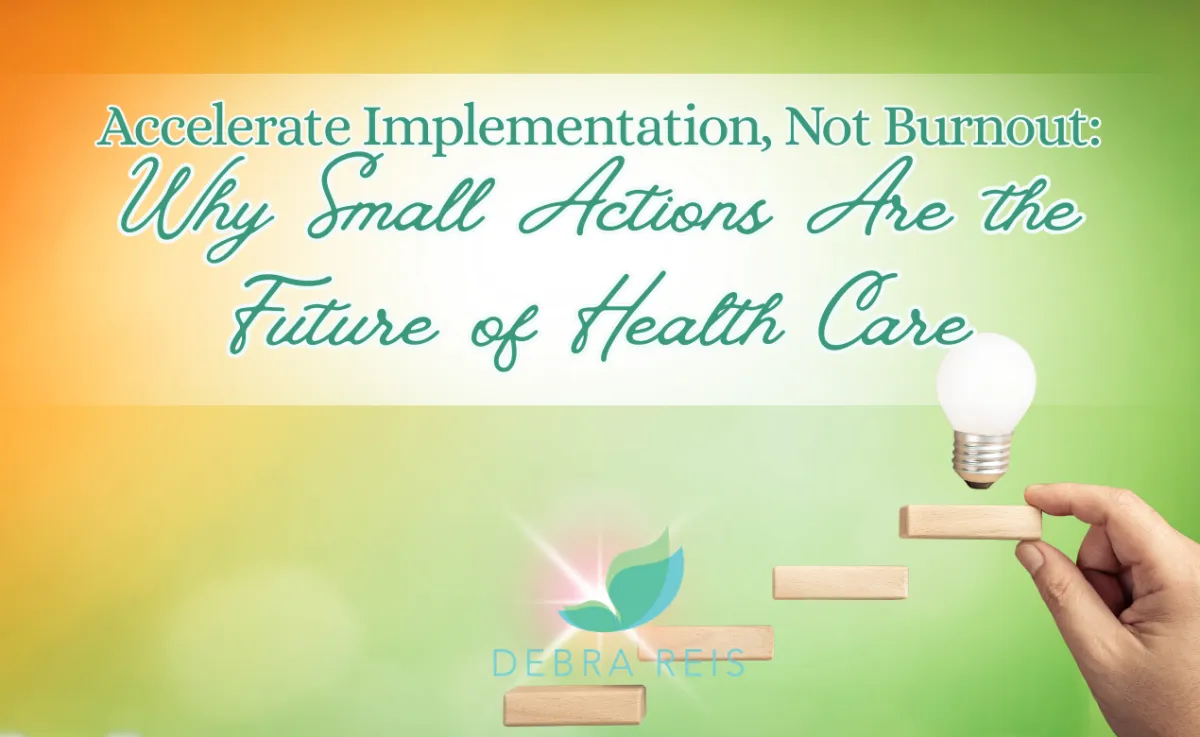
Accelerate Implementation, Not Burnout: Why Small Actions are the Future of Healthcare
Health care is at a crossroads.
Every healthcare leader I meet recognizes the same challenges: burnout, staffing shortages, emotional exhaustion, moral distress, and increasing demands on an already stretched workforce. We've spent years studying the problem, discussing solutions, and investing in wellness initiatives.
Yet many healthcare professionals continue to struggle.
During a recent panel discussion at the One Experience Conference, I had the privilege of joining leaders from across health care to explore one important question:
How do we move from awareness to meaningful change?
As our conversation unfolded, one idea continued to rise to the surface:
Health care doesn't need to accelerate productivity. Health care needs to accelerate implementation.
That statement resonated because it captures where healthcare is today.
We already know burnout exists. We know turnover is costly.
We know that chronic stress, workforce shortages, and moral distress affect not only caregivers but also patient outcomes, team relationships, and organizational culture.
The evidence is no longer the question. The question is:
What are we willing to implement to create lasting change?

Awareness Is Only the Beginning
Over the past several years, healthcare organizations have made tremendous progress in recognizing the importance of caregiver well-being. We've seen investments in employee assistance programs, resilience initiatives, wellness committees, mindfulness training, and mental health resources.
These efforts matter.
But awareness alone doesn't change culture.
Culture changes when well-being becomes part of everyday practice, not another item on a checklist or another annual initiative.
The challenge isn't finding more solutions.
The challenge is helping healthcare professionals consistently use the practical tools we already know make a difference.
Momentum Creates Transformation
One of the greatest lessons I've learned throughout my nursing career is this:
Transformation begins with momentum.
People don't change because they're given more information; they change because they experience success. That success may look surprisingly simple.
✨A nurse taking three intentional breaths before entering a difficult patient room.
✨A leader begins a morning huddle with sixty seconds of gratitude or grounding.
✨A team member reaching for an aromatherapy inhaler after an emotionally challenging interaction.
✨A colleague pauses long enough to ask another, "How are you really doing today?"
These moments may seem small, but they are far from insignificant.
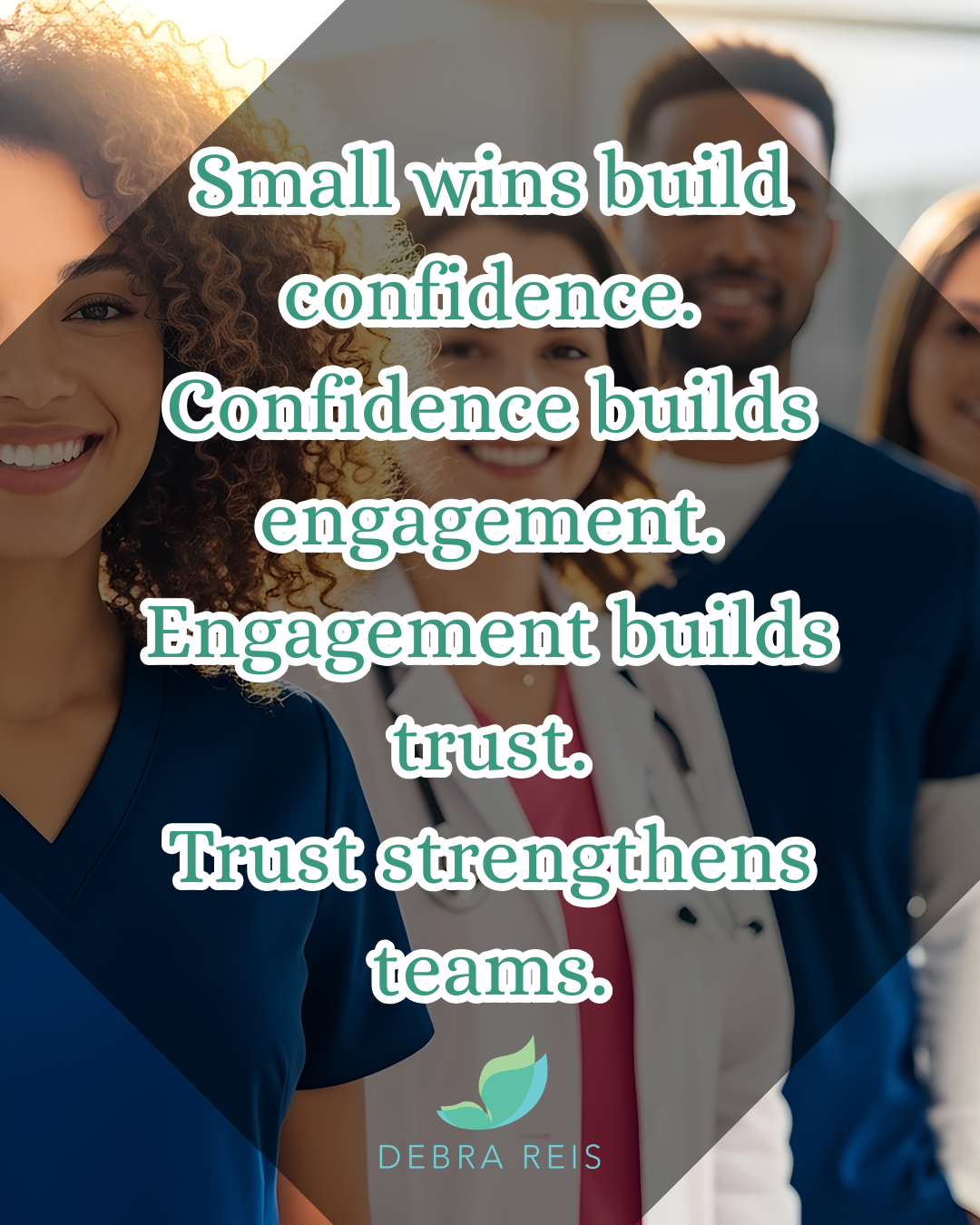
Small wins build confidence.
Confidence builds engagement.
Engagement builds trust.
Trust strengthens teams.
And stronger teams provide safer, more compassionate care.
Integrating Well-Being Into the Workflow
Throughout my work with healthcare organizations, I've noticed something interesting:
The most successful wellness programs don't ask people to find more time.
They fit naturally into the time people already have.
They become part of the daily rhythm of work.
This philosophy became the foundation for I-S.T.E.P.™ (Integrative Supportive Therapy Engagement Program), a practical framework designed to help healthcare professionals restore balance in five minutes or less through three simple pillars:
Relaxation Techniques
Brief breathing exercises, mindfulness, and guided relaxation that help regulate the nervous system and restore focus.
Aromatherapy
Evidence-informed essential oil practices that provide quick support for stress reduction, emotional balance, and mental clarity.
Gentle Movement
Simple movements that release physical tension, improve circulation, refresh the mind, and restore energy throughout the workday.
These practices aren't intended to add one more task to an already busy day.
They're designed to become part of the workflow, simple, repeatable moments that support resilience while caring for others.
The Organizations That Will Thrive
The healthcare organizations that will lead the future won't necessarily be those with the largest wellness budgets.
They will be the organizations willing to move:
From planning to implementation.
From awareness to integration.
From occasional wellness events to consistent daily practices.
From talking about resilience to intentionally building it.
This isn't about asking healthcare professionals to do more.
It's about helping them care for themselves while they continue caring for others.
One Small Step
As you reflect on your own work, or the organization you lead, I invite you to consider one simple question:
What is one small action you can implement today that will support your well-being or encourage someone else on your team?
Perhaps it's taking one intentional breath before entering a patient's room.
Perhaps it's checking in with a colleague.
Perhaps it's creating one minute of calm during a staff huddle.
Because lasting transformation rarely begins with sweeping change.
It begins with one intentional action repeated consistently.
One breath.
One supportive conversation.
One moment of presence.
One step toward restoring the heart of healthcare.
Continue the Conversation
If this message resonates with you, I'd love to invite you to continue the conversation by listening to my podcast interview with Nancy Matthews, where we discuss my chapter in the bestselling book Being the One, titled "Restoring the Heart of Healthcare."
In our conversation, we explore why restoring healthcare begins with restoring the caregiver, the inspiration behind my work, and practical ways healthcare professionals can build resilience while continuing to provide compassionate care.
I hope it encourages you to take that next small step, because together, we can restore the heart of healthcare, one person, one team, and one intentional action at a time.

Follow Us


Follow Us
Accelerate Implementation, Not Burnout: Why Small Actions are the Future of Healthcare
Health care is at a crossroads.
Every healthcare leader I meet recognizes the same challenges: burnout, staffing shortages, emotional exhaustion, moral distress, and increasing demands on an already stretched workforce. We've spent years studying the problem, discussing solutions, and investing in wellness initiatives.
Yet many healthcare professionals continue to struggle.
During a recent panel discussion at the One Experience Conference, I had the privilege of joining leaders from across health care to explore one important question:
How do we move from awareness to meaningful change?
As our conversation unfolded, one idea continued to rise to the surface:
Health care doesn't need to accelerate productivity. Health care needs to accelerate implementation.
That statement resonated because it captures where healthcare is today.
We already know burnout exists. We know turnover is costly.
We know that chronic stress, workforce shortages, and moral distress affect not only caregivers but also patient outcomes, team relationships, and organizational culture.
The evidence is no longer the question. The question is:
What are we willing to implement to create lasting change?
Awareness Is Only the Beginning
Over the past several years, healthcare organizations have made tremendous progress in recognizing the importance of caregiver well-being. We've seen investments in employee assistance programs, resilience initiatives, wellness committees, mindfulness training, and mental health resources.
These efforts matter.
But awareness alone doesn't change culture.
Culture changes when well-being becomes part of everyday practice, not another item on a checklist or another annual initiative.
The challenge isn't finding more solutions.
The challenge is helping healthcare professionals consistently use the practical tools we already know make a difference.
Momentum Creates Transformation
One of the greatest lessons I've learned throughout my nursing career is this:
Transformation begins with momentum.
People don't change because they're given more information; they change because they experience success. That success may look surprisingly simple.
✨A nurse taking three intentional breaths before entering a difficult patient room.
✨A leader begins a morning huddle with sixty seconds of gratitude or grounding.
✨A team member reaching for an aromatherapy inhaler after an emotionally challenging interaction.
✨A colleague pauses long enough to ask another, "How are you really doing today?"
These moments may seem small, but they are far from insignificant.
Small wins build confidence.
Confidence builds engagement.
Engagement builds trust.
Trust strengthens teams.
And stronger teams provide safer, more compassionate care.
Integrating Well-Being Into the Workflow
Throughout my work with healthcare organizations, I've noticed something interesting:
The most successful wellness programs don't ask people to find more time.
They fit naturally into the time people already have.
They become part of the daily rhythm of work.
This philosophy became the foundation for I-S.T.E.P.™ (Integrative Supportive Therapy Engagement Program), a practical framework designed to help healthcare professionals restore balance in five minutes or less through three simple pillars:
Relaxation Techniques
Brief breathing exercises, mindfulness, and guided relaxation that help regulate the nervous system and restore focus.
Aromatherapy
Evidence-informed essential oil practices that provide quick support for stress reduction, emotional balance, and mental clarity.
Gentle Movement
Simple movements that release physical tension, improve circulation, refresh the mind, and restore energy throughout the workday.
These practices aren't intended to add one more task to an already busy day.
They're designed to become part of the workflow, simple, repeatable moments that support resilience while caring for others.
The Organizations That Will Thrive
The healthcare organizations that will lead the future won't necessarily be those with the largest wellness budgets.
They will be the organizations willing to move:
From planning to implementation.
From awareness to integration.
From occasional wellness events to consistent daily practices.
From talking about resilience to intentionally building it.
This isn't about asking healthcare professionals to do more.
It's about helping them care for themselves while they continue caring for others.
One Small Step
As you reflect on your own work, or the organization you lead, I invite you to consider one simple question:
What is one small action you can implement today that will support your well-being or encourage someone else on your team?
Perhaps it's taking one intentional breath before entering a patient's room.
Perhaps it's checking in with a colleague.
Perhaps it's creating one minute of calm during a staff huddle.
Because lasting transformation rarely begins with sweeping change.
It begins with one intentional action repeated consistently.
One breath.
One supportive conversation.
One moment of presence.
One step toward restoring the heart of healthcare.
Continue the Conversation
If this message resonates with you, I'd love to invite you to continue the conversation by listening to my podcast interview with Nancy Matthews, where we discuss my chapter in the bestselling book Being the One, titled "Restoring the Heart of Healthcare."
In our conversation, we explore why restoring healthcare begins with restoring the caregiver, the inspiration behind my work, and practical ways healthcare professionals can build resilience while continuing to provide compassionate care.
I hope it encourages you to take that next small step, because together, we can restore the heart of healthcare, one person, one team, and one intentional action at a time.