BLOG
Supportive Therapies For Better Outcomes — Enrich Your Life Through Relaxation Techniques, Aromatherapy, and Gentle Movement.
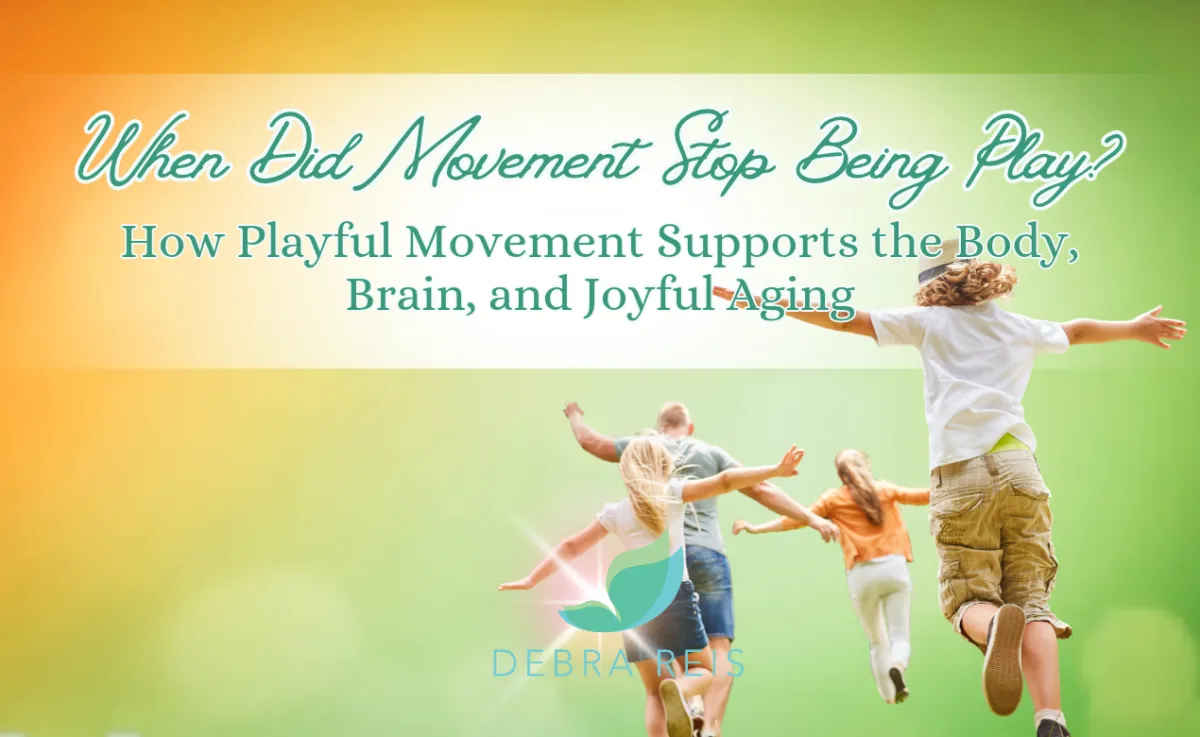
When did Movement Stop Being Play?
How Playful Movement Supports the Body, Brain, and Joyful Aging
Think back to when you were a child. You probably didn't call it exercise.
You danced when you heard music. You skipped, reached, twisted, wiggled, ran, pretended, and explored. Sometimes you moved simply because moving felt good.
Movement was play.
Somewhere along the way, many of us began thinking about movement differently. Exercise became something we should do, measured in steps, repetitions, calories, miles, or minutes.
But what if we brought some of the play back?
What if movement could support our strength, mobility, and brain health while also encouraging creativity, curiosity, connection, and joy?
That's one of the reasons I love Ageless Grace®.
Your Body Needs Movement at Every Age
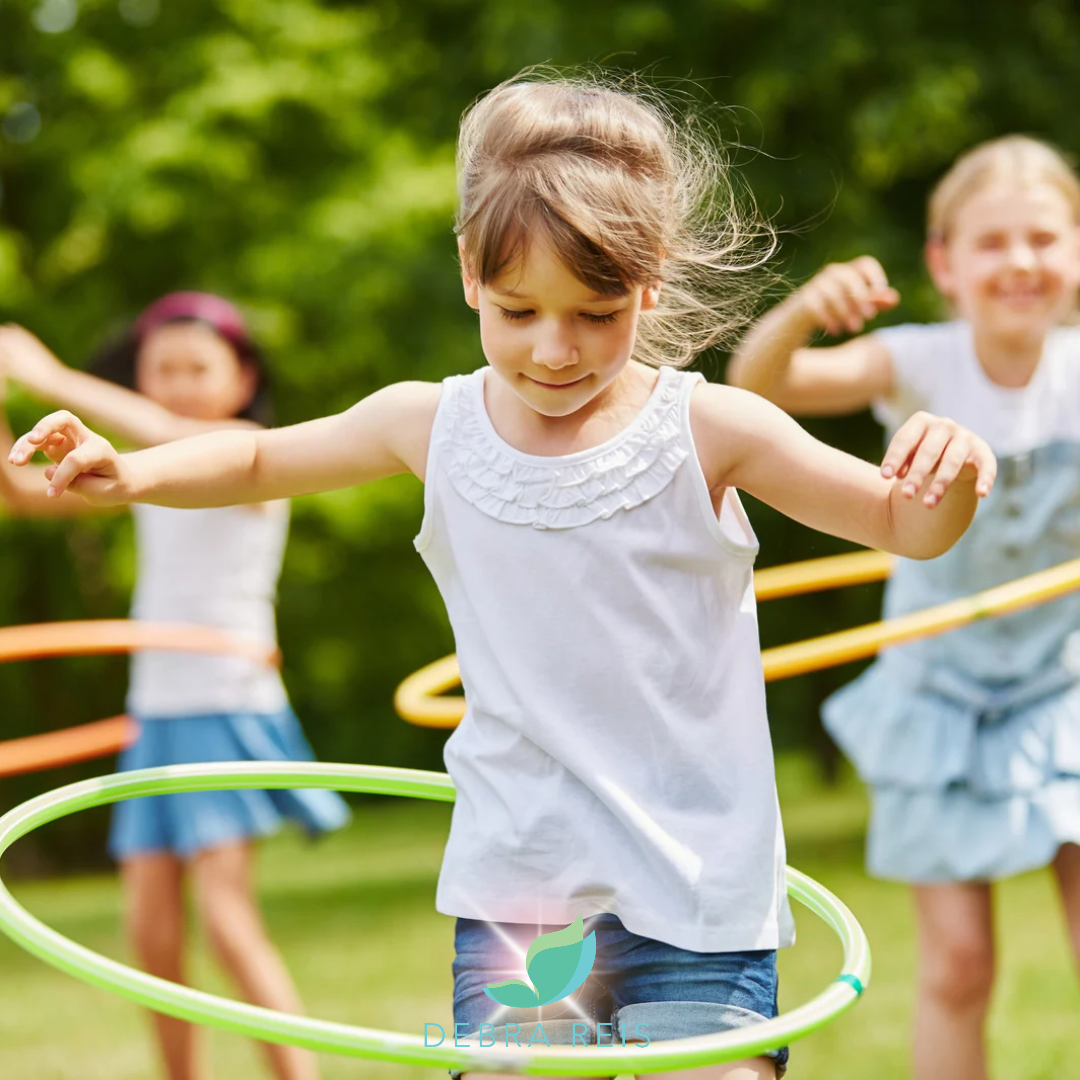
Movement is essential throughout our lives, but it becomes especially important as we grow older. Staying physically active can help us maintain the mobility and functional abilities that allow us to continue doing the things we enjoy.
We want to reach for something on a shelf.
Get up from a chair.
Turn to look behind us.
Walk with confidence.
Use our hands easily.
Play with grandchildren.
Travel.
Dance.
And simply participate fully in our everyday lives.
Ageless Grace incorporates movements that challenge balance, coordination, mobility, flexibility, dexterity, strength, and everyday function. The movements are performed from a chair, making the program accessible and adaptable for many ages, abilities, and fitness levels. But there is another important piece to this approach.
We're not only moving the body. We're engaging the brain.
Movement Is Exercise for the Brain, Too
One of the most fascinating things about our brains is their ability to continue changing and adapting throughout life. This capacity is known as neuroplasticity.
The brain responds to experiences. When we learn something new, solve a problem, coordinate an unfamiliar movement, use our imagination, or challenge an established pattern, we ask the brain to respond differently. That's very different from simply repeating something we've done thousands of times.
Imagine tapping one foot while drawing a circle in the air with the opposite hand.
Now reverse directions. Perhaps add music. Then change the pattern again.
Suddenly, something that looks like a simple movement requires attention, coordination, concentration, and problem-solving.
Your brain and body have to communicate. And sometimes they don't agree!
That's often when the laughter begins.
Why Novelty Matters
Our bodies become very efficient at familiar movements. That's useful in everyday life, but our brains also benefit from being challenged.
Ageless Grace uses music, imagination, coordination, creativity, and unexpected movement patterns to introduce novelty. Rather than worrying about performing a movement perfectly, participants are encouraged to explore.
Can you move one side of your body differently from the other? Can you imagine you're swimming, painting, playing an instrument, or moving through another environment? Can your hands do one thing while your feet do something completely different?
The goal isn't perfection. The challenge is part of the practice.
These playful experiences can engage attention, memory, creativity, coordination, and brain-body communication while the body is in motion.
When Did Movement Stop Being Fun?
This may be one of the most important questions we can ask ourselves about exercise.
If movement always feels like another obligation, how likely are we to continue doing it?
Joy matters. So does curiosity. So does laughter. And so does connection.
As a nurse and integrative wellness educator, I have spent much of my career helping people recognize that well-being is not one-dimensional. Our physical, mental, emotional, and even spiritual well-being is interconnected.
Movement can touch all of them.
A playful movement experience may help us feel more energized physically while challenging us mentally. Music can influence our emotional experience. Moving with others can create connection. Slowing down afterward can give us an opportunity to become quiet and present.
That's whole-person well-being.
Moving Can Also Mean Slowing Down
Not every form of movement needs to be energetic. Sometimes movement can be contemplative.
Walking a labyrinth, for example, invites us to slow our pace and turn our attention inward. Instead of focusing on how quickly we're moving or where we're going, we can simply notice our breath, our body, and the present moment.
I love pairing these two ideas: Playful movement that awakens us and mindful movement that quiets us.
Both can have a place in caring for ourselves.
The progression is simple:
Move → Play → Reflect → Connect
Movement for the body. Play for the brain. Reflection for the spirit. Connection for well-being.
No dance experience is needed. There is no complicated choreography and no pressure to keep up with anyone else.
What If We Changed the Way We Think About Healthy Aging?
Healthy aging isn't simply about preventing decline.
Perhaps it's also about continuing to discover what our bodies and brains can do.
Can we remain curious? Can we learn something unfamiliar? Can we challenge our coordination? Can we laugh when something doesn't go quite as planned? Can we stay connected to other people? Can we find moments of stillness? And can we continue experiencing the joy of movement?
I believe we can.
Our bodies may change as we age. Our abilities may change. The way we move may change. But our opportunity to move, learn, play, explore, and connect can remain with us throughout our lives.
Maybe we don't need to exercise as much as we did when we were younger.
Maybe we need to remember something we knew when we were younger:
Movement is good for us, and movement can be fun.
Follow Us


Follow Us
When did Movement Stop Being Play?
How Playful Movement Supports the Body, Brain, and Joyful Aging
Think back to when you were a child. You probably didn't call it exercise.
You danced when you heard music. You skipped, reached, twisted, wiggled, ran, pretended, and explored. Sometimes you moved simply because moving felt good.
Movement was play.
Somewhere along the way, many of us began thinking about movement differently. Exercise became something we should do, measured in steps, repetitions, calories, miles, or minutes.
But what if we brought some of the play back?
What if movement could support our strength, mobility, and brain health while also encouraging creativity, curiosity, connection, and joy?
That's one of the reasons I love Ageless Grace®.
Your Body Needs Movement at Every Age
Movement is essential throughout our lives, but it becomes especially important as we grow older. Staying physically active can help us maintain the mobility and functional abilities that allow us to continue doing the things we enjoy.
We want to reach for something on a shelf.
Get up from a chair.
Turn to look behind us.
Walk with confidence.
Use our hands easily.
Play with grandchildren.
Travel.
Dance.
And simply participate fully in our everyday lives.
Ageless Grace incorporates movements that challenge balance, coordination, mobility, flexibility, dexterity, strength, and everyday function. The movements are performed from a chair, making the program accessible and adaptable for many ages, abilities, and fitness levels. But there is another important piece to this approach.
We're not only moving the body. We're engaging the brain.
Movement Is Exercise for the Brain, Too
One of the most fascinating things about our brains is their ability to continue changing and adapting throughout life. This capacity is known as neuroplasticity.
The brain responds to experiences. When we learn something new, solve a problem, coordinate an unfamiliar movement, use our imagination, or challenge an established pattern, we ask the brain to respond differently. That's very different from simply repeating something we've done thousands of times.
Imagine tapping one foot while drawing a circle in the air with the opposite hand.
Now reverse directions. Perhaps add music. Then change the pattern again.
Suddenly, something that looks like a simple movement requires attention, coordination, concentration, and problem-solving.
Your brain and body have to communicate. And sometimes they don't agree!
That's often when the laughter begins.
Why Novelty Matters
Our bodies become very efficient at familiar movements. That's useful in everyday life, but our brains also benefit from being challenged.
Ageless Grace uses music, imagination, coordination, creativity, and unexpected movement patterns to introduce novelty. Rather than worrying about performing a movement perfectly, participants are encouraged to explore.
Can you move one side of your body differently from the other? Can you imagine you're swimming, painting, playing an instrument, or moving through another environment? Can your hands do one thing while your feet do something completely different?
The goal isn't perfection. The challenge is part of the practice.
These playful experiences can engage attention, memory, creativity, coordination, and brain-body communication while the body is in motion.
When Did Movement Stop Being Fun?
This may be one of the most important questions we can ask ourselves about exercise.
If movement always feels like another obligation, how likely are we to continue doing it?
Joy matters. So does curiosity. So does laughter. And so does connection.
As a nurse and integrative wellness educator, I have spent much of my career helping people recognize that well-being is not one-dimensional. Our physical, mental, emotional, and even spiritual well-being is interconnected.
Movement can touch all of them.
A playful movement experience may help us feel more energized physically while challenging us mentally. Music can influence our emotional experience. Moving with others can create connection. Slowing down afterward can give us an opportunity to become quiet and present.
That's whole-person well-being.
Moving Can Also Mean Slowing Down
Not every form of movement needs to be energetic. Sometimes movement can be contemplative.
Walking a labyrinth, for example, invites us to slow our pace and turn our attention inward. Instead of focusing on how quickly we're moving or where we're going, we can simply notice our breath, our body, and the present moment.
I love pairing these two ideas: Playful movement that awakens us and mindful movement that quiets us.
Both can have a place in caring for ourselves.
The progression is simple:
Move → Play → Reflect → Connect
Movement for the body. Play for the brain. Reflection for the spirit. Connection for well-being.
No dance experience is needed. There is no complicated choreography and no pressure to keep up with anyone else.
What If We Changed the Way We Think About Healthy Aging?
Healthy aging isn't simply about preventing decline.
Perhaps it's also about continuing to discover what our bodies and brains can do.
Can we remain curious? Can we learn something unfamiliar? Can we challenge our coordination? Can we laugh when something doesn't go quite as planned? Can we stay connected to other people? Can we find moments of stillness? And can we continue experiencing the joy of movement?
I believe we can.
Our bodies may change as we age. Our abilities may change. The way we move may change. But our opportunity to move, learn, play, explore, and connect can remain with us throughout our lives.
Maybe we don't need to exercise as much as we did when we were younger.
Maybe we need to remember something we knew when we were younger:
Movement is good for us, and movement can be fun.